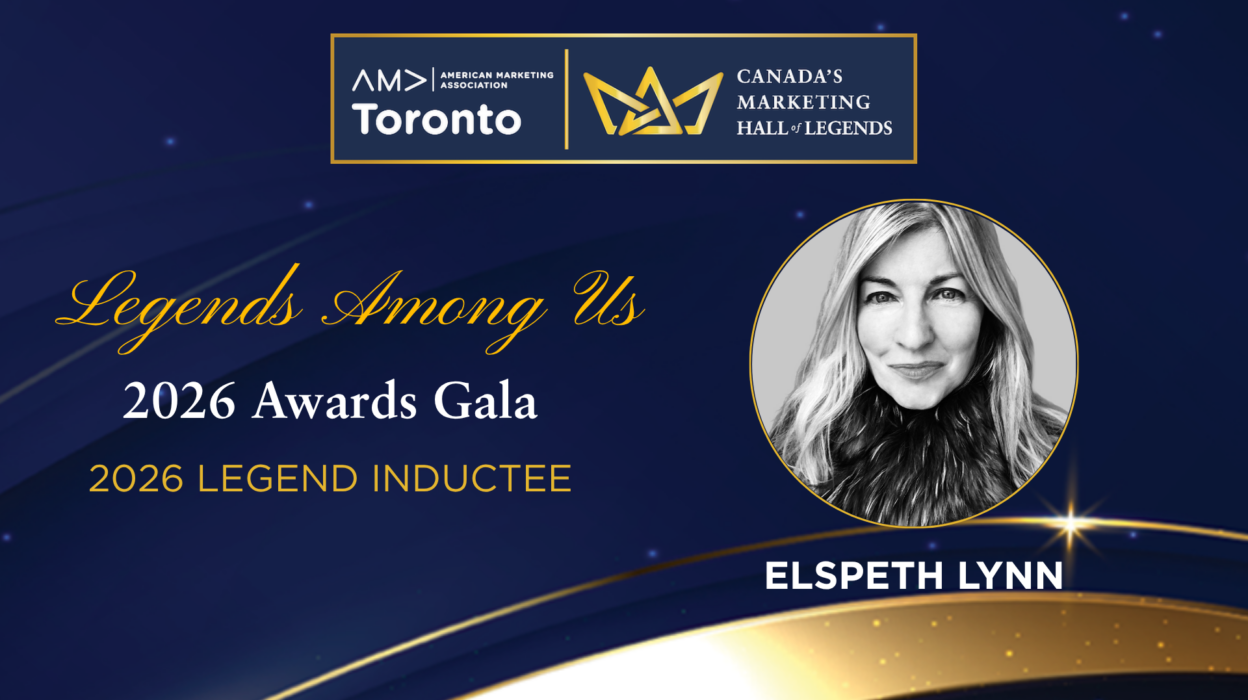
Each year, Canada’s Marketing Hall of Legends recognizes the contributions of extraordinary marketers whose work has shaped the industry. This year, Globe Media Group sat down with 2026 inductee Elspeth Lynn to discuss her career, what the honour means to her, and the leadership philosophy that has guided her work. Elspeth Lynn will be formally inducted into Canada’s Marketing Hall of Legends at the 2026 Awards Gala on May 28 in Toronto. To learn more about the program and this year’s inductees, visit Canada’s Marketing Hall of Legends.
With a career spanning over three decades and two continents, Elspeth has helped to shape the global advertising landscape. She’s won numerous awards, including Cannes Lions, Marketing Awards, and Cassies. Today, she is the co-founder and Creative Director of Unbound, an independent advertising agency based in London, UK.
Finding your voice in an industry that wasn’t built for you
If you’d told Elspeth at the start of her career that she’d be inducted into the Hall of Legends, she wouldn’t have believed you.
Her career began in the 90s, when being a woman in advertising was an altogether different experience. Advertisements spoke about women, not to them, and within the industry, there was less interest in the unique perspective women could bring to the table.
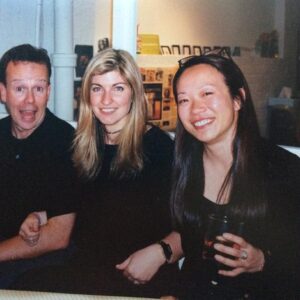
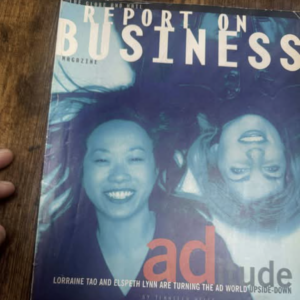
She recalled a time when she and her creative partner, Lorraine Tao, weren’t allowed to get the award for their work on Fruit of the Loom, and instead had to watch as the five men who ran the agency went to receive it.
“So there were moments where there were three steps forward, one step backwards,” she mused. “Luckily, things have progressed.”
Those early experiences shaped how she thinks about access and the responsibility to make room for others.

Leaning on community
“You start off thinking ‘I’ve got to do this all by myself, I’m a really independent person’,” she said, yet, looking back, “The reason I’m here is that a lot of people have either helped me, given me a leg up, partnered with me, or championed me. And that’s why I’m able to get this award. I haven’t done it on my own.”
This sense of community and the importance of encouraging others are lessons she’s taken to heart.
“People don’t realize the potential they may have. And I think some agencies make them feel afraid to say thoughts that they might have. They’re not encouraged.”
For Elspeth, there are few things worse than people not having their potential nurtured and realized. It’s an ethos that’s shaped both her creative collaborations and her leadership.
Creativity is a human exercise
Her particular approach to advertising comes from a fundamental belief in the power of creativity to solve problems. It’s something she often sees overlooked, particularly in an industry that can at times become overly fixated on ads as mere outputs.
“Creativity and imagination can solve so many things from left field that people wouldn’t expect… just by reframing it, looking at it from a slightly different angle, a creative thought can solve a business problem.”
While AI dominates industry discussion, it has only reinforced Elspeth’s belief that brilliant work still requires a human touch: instinct, empathy, humour, and the ability to recognize truths technology has not yet replicated.
“Never underestimate the human aspect of what we do,” she emphasized.
You can’t have great work without great heart
Many of the elements that make work great are timeless: things like a brand’s North Star, finding the insight you want to speak to, and coming up with a really great idea.
Elspeth once received the advice that if your idea isn’t that great, “you can just art direct the hell out of it.” While she’s abided by that when required, her advice to young creatives is to take the time necessary to first have an idea, then craft their work.
You never want to let the speed of a project get in the way of your success. “If you’re going to spend months on a project, you might as well do as much as you can to make it something you’ll be proud of.”
Loving the work and putting your heart into it are crucial to this process. She has seen many creatives burn out when they don’t receive “emotional compensation” for their efforts. When you feel your time was well spent, you’re less likely to grow resentful. Cultivating a sense of pride for the work is fundamental to surviving what can be a demanding industry.
Leadership is about seeing the whole person, not the job title
One of Elspeth’s long-standing frustrations with the industry is how people get boxed in by job titles.
“Most people are capable of much more than their job title suggests. I always say, it doesn’t matter what your job title is: swim beyond your lane.”
This is part of a larger philosophy she holds dear: the importance of cultivating diversity of thought within a team.
“It’s so important to have differently wired brains on a project. I’m not a pragmatist, so I need a really amazing project director. I need an organized account director. If it weren’t for people like that, I’d be sitting in the corner, scribbling ideas that went nowhere.”
It’s never too late to learn something new
These days, Elspeth finds herself fascinated with people.
“Human beings are endless in their possibilities of behaviour and what they may say and unpredictability. So, you’re always learning about people.” Being in the advertising business is, as she calls it, “a psychological exercise as much as a creative endeavour. You constantly learn about yourself and others.”
In many ways, Elspeth’s career is a reminder that the best creative work is itself an extension of learning about people and making others feel seen. And the best leaders create the conditions necessary for their teams to reach their full potential.
After three decades in the industry she has helped reshape, seeing how much has changed makes her Hall of Legends recognition taste just that much sweeter.