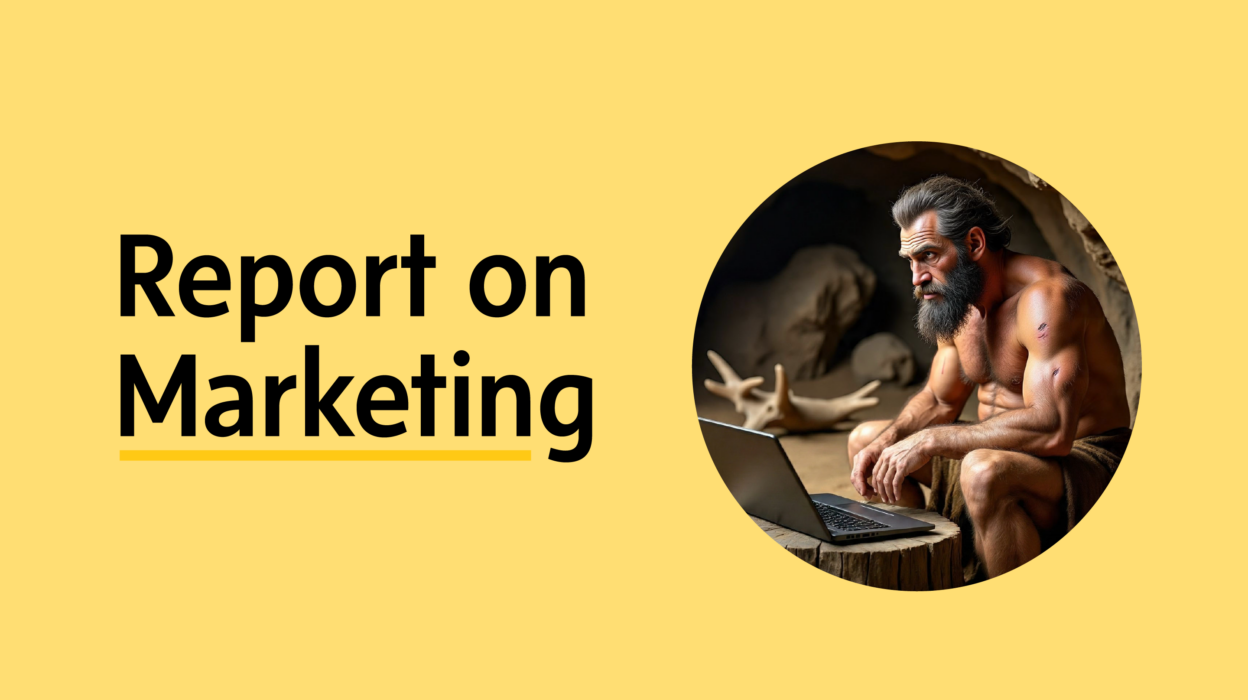
Natalie Armata, Co-Chief Creative Officer at Toronto-based agency G&G Advertising – A division of Acart, considers how our brains cope with daily exposure to 10,000 messages.
It is estimated that an average person consumes 74 gigabytes of content a day through video, social media, and other digital platforms (Bohn & Short). This is equal to roughly 100,000 words, about the length of an average book. Screen time alone averages six to seven hours daily (DataReportal, 2024; Pew Research Center, 2023).
While content production is accelerating at breakneck speed, our brains haven’t kept pace. From an evolutionary perspective, the human brain has remained largely unchanged for thousands of years, with only modest refinements in connectivity and structure (Lieberman, 2013; Deacon, 1997).
Two hundred thousand years ago we were hunter-gatherers. Long before agriculture, writing or even permanent settlements, daily life embodied survival, social bonding in tight-knit communities, movement and awareness of the natural world.
Back then, leisure involved storytelling, dancing, play and music compared to today’s streaming, gaming, scrolling and social media. All interactions were face-to-face versus today’s screens of varying sizes. Working days have gone from three to six hours to between eight and twelve. (Kelly, 2013). Our cognitive load was once situational awareness, memory and navigation, now it’s drastic multi-tasking, short deadlines, high amounts of both relevant and irrelevant information and abstract decision making.
The type of stress faced by our ancestors was acute – injuries, food scarcity and predators. Now it’s chronic, including deadlines, financial worries and social pressures. You could argue that we have experienced some cognitive offloading when it comes to the safety nets of social welfare and collective knowledge, but there’s no denying the immense overload of information and stimulation today.
How memory works
So, how do our brains retain all of this information? There are three main types of memory: sensory, short term and long term. Sensory collects information from, you guessed it, your senses (hearing, touch, smell, taste and vision). We only store this information for a couple of seconds, it’s unconscious but it’s highly detailed – think of the smell of pumpkin pie bringing you straight back to Grandma’s house.
Short-term memory is a temporary storage space but with some effort, through chunking and rehearsing, you can retain the information longer. It’s worth noting The Ebbinghaus Forgetting Curve (Ebbinghaus, 1885), which illustrates that when you first learn something, up to 80% of the information learned is forgotten after 24 hours.
Meanwhile, long-term memory includes declarative (important facts, events, locations) and non-declarative (learned skills, habits and relationships). Moreover, our brains are selective about the kind of information we retain. We have a gatekeeper called the RAS (reticular activating system), which is a network of nerves in the brainstem that allows only necessary information to reach the cerebral cortex while filtering out irrelevant stimuli. RAS plays a crucial role in maintaining alertness, focus, and attention. Physically, our brains are working very hard burning 300-400 calories a day and using 20% of our body’s resting energy. When we are cognitively overloaded, they use more glucose, which can cause fatigue and a decrease in performance.
How does it all break down? Let’s go back to how the average person is exposed to about 10,000 messages a day. These messages include ads, notifications, texts, social media, continuous news and emails. When we consider the way our brain operates – all the fatigue, distractions, emotional filtering and multitasking – only a fraction are processed deeply. And messages remembered? According to Miller’s Law it’s “7 plus or minus 2”, leaving us with only five to nine items at a time. So, from 10,000 messages to five. That is, if we don’t forget 4 of them after 24 hours, as Ebbinghaus suggests.
What’s a marketer to do?
Know your audience – the 200,000 year-old brain.
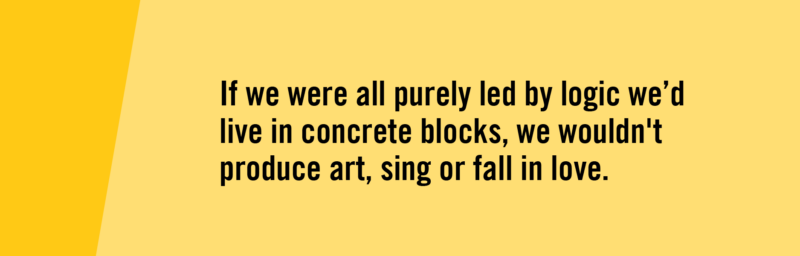
Emotion first, logic later. We all know this but so often we fall into the logic trap. If we were all led by logic, we’d live in concrete blocks, rarely sing, produce art or fall in love. We’re emotional beings, our brains remember feelings over facts. We enjoy experiencing joy, surprise, fear, empathy and nostalgia.
Repetition, but with variation. Variation is the key word here. In other words, don’t repeat your company name five times in an ad, the brain tunes out redundancy, and this will likely annoy your viewers/listeners. That’s why structured campaigns are so strong – they communicate an idea ‘with legs’, retell the main message in various ways, keeping the messaging fresh but still on point.
Simplicity! The brain naturally resists friction and loves clear and simple messages. It’s important to keep copy short and layouts simple to make a strong impact.
The power of pictures. The brain processes visuals about 60,000 times faster than text. Clearly a picture is worth far more than 1,000 words.
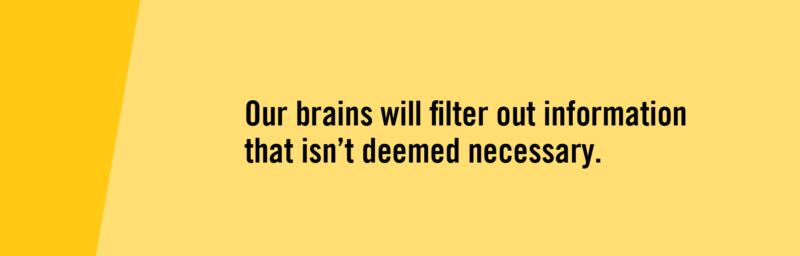
Relevance. Our brains will filter out information that isn’t deemed necessary, as mentioned earlier due to RAS. For the most part, our minds are drawn to information that is related to survival, goals, health and relationships. We need to consider what our audience is thinking: What’s in it for me? If that’s not clear, they will move on. The more you can connect to people, the stickier your ads.
Surprise or Novelty. We’ll often test creative in our industry, the ad that typically “wins” is the one that feels the most familiar. However, this is a recipe for forgettable. New and/or the unexpected stimulates dopamine in the brain, this increases engagement and memory.
What does the future hold?
It’s estimated that by early 2027, due to the influence of AI, the amount of content we will be exposed to in a day will triple. Three novels a day? In the end, there’s only so much our 200,000-year-old brains can absorb. The paradox of information overload prevents us from making good decisions and leading happy lives. Ultimately, we will need to become more discerning about what enters our grey matter.
And unless marketers hire Inception’s Don Cobb, real breakthroughs won’t come from shouting louder –but from understanding, and respecting, the limits of these ancient, elegant brains we’re all still using.
G&G Advertising – A division of Acart is a member of the Institute of Canadian Agencies (ICA). Report on Marketing is where leading Canadian agencies showcase their insights, cutting-edge research and client successes. The Report on Marketing provides a valuable source of thought leadership for Canadian marketers to draw inspiration from. Find more articles like this in the Report on Marketing.
See all Ideas & Insights