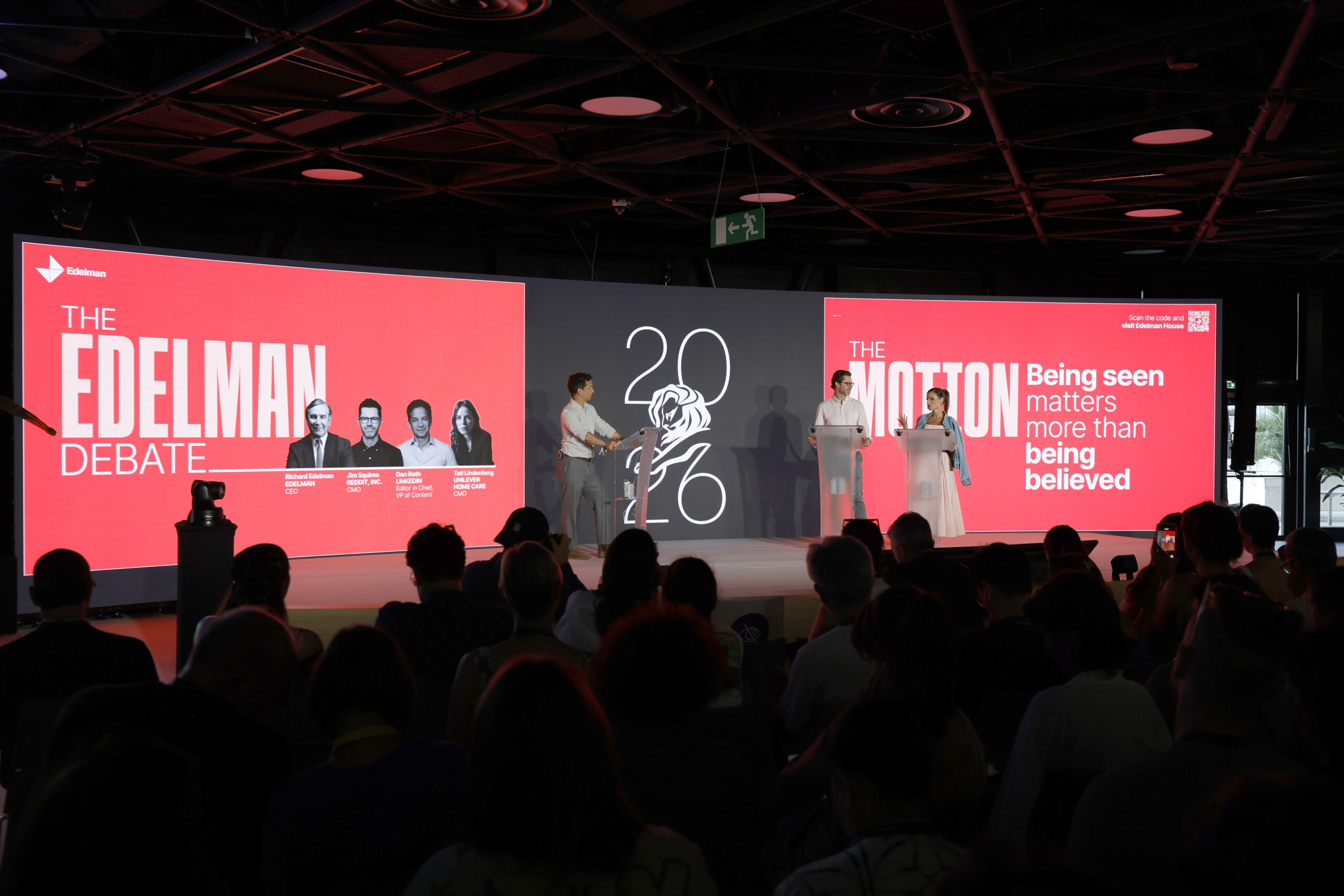
Beyond the cocktail parties, award ceremonies, and networking opportunities, Cannes Lions is also where marketing ideas are shared, shaped, and challenged. This year, Edelman celebrated this spirit of discourse by holding a debate on one of marketing’s most common tensions: Is it more important to build brand awareness or brand loyalty? Or as the session title puts it: where does brand power really sit today – discovery or belief? The former refers to the beginning of the funnel, when marketers use distribution channels to create mental availability with a wide audience, and the latter happens over time, as brands leverage creators, communities, and experiences to build long-term trust with a core group.
The debate was held in light of Edelman’s recent Trust Report, which paints a picture of an increasingly divided consumer landscape. Richard Edelman calls it “a time of insularity,” where two-thirds of consumers only trust those who share their values and beliefs. Nearly half of this group is unwilling to buy brands used by those who are different from them. But over 70% of them say they’ll still use a brand if they trust it. He explained that “trust has teeth” – it’s the key way to break through in an insular world.
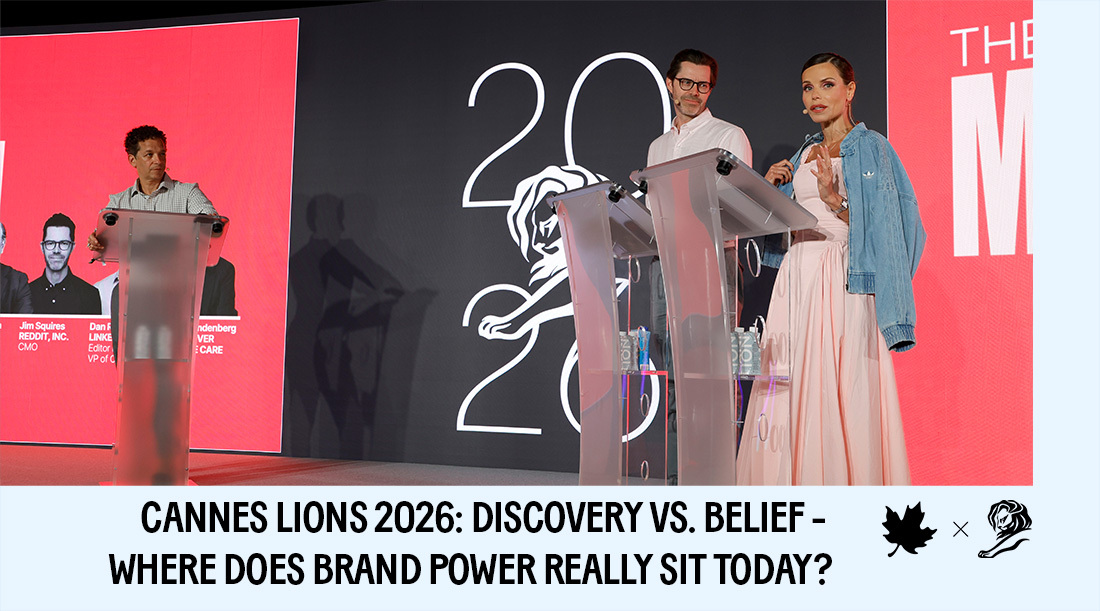
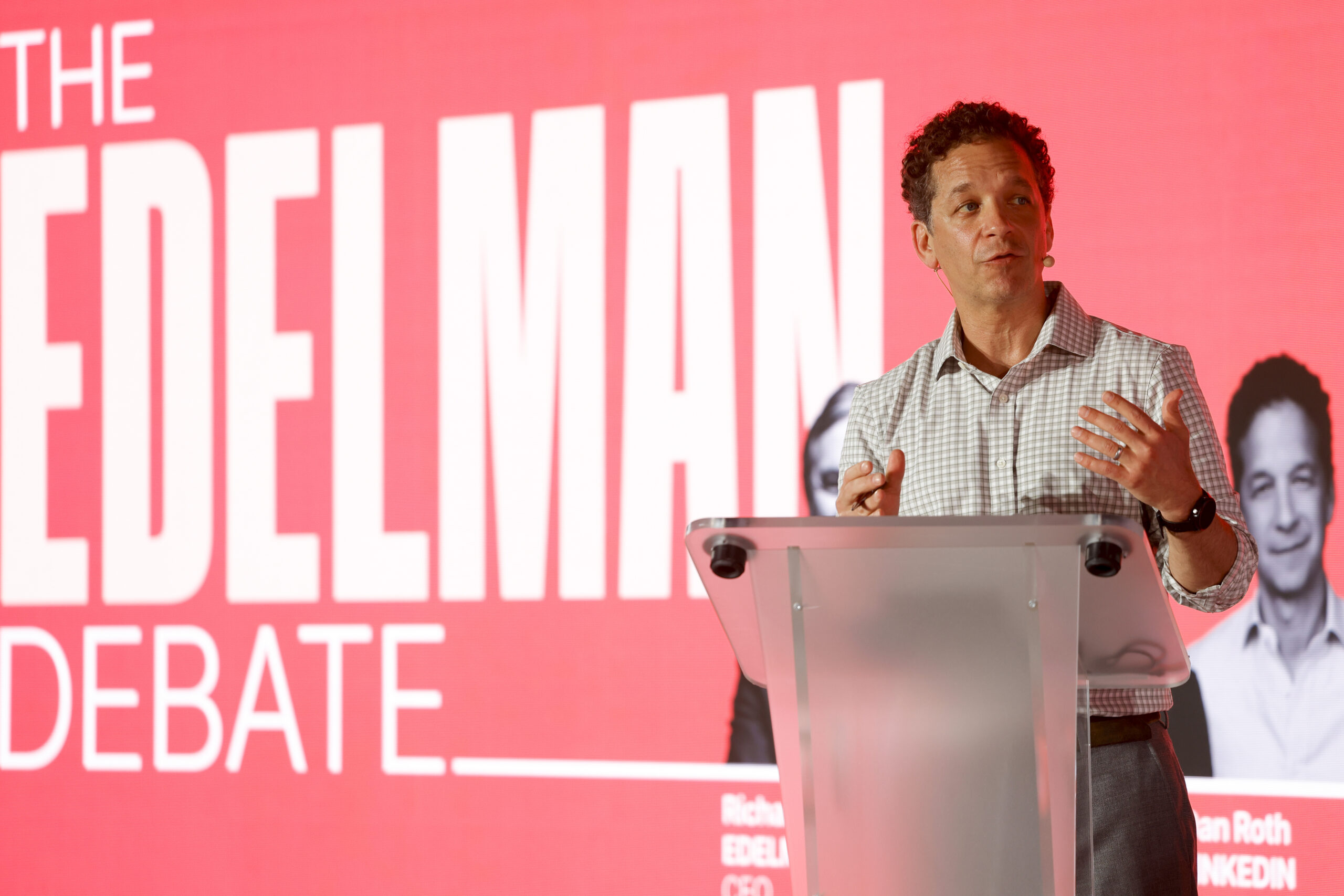
Against that backdrop, moderator Dan Roth, LinkedIn’s Editor in Chief, posed the debate’s central motion: “being seen matters more than being believed.” Jim Squires, CMO of Reddit, argued for the motion, on the side of discovery, and Tati Lindenberg, CMO of Unilever Home Care, argued against the motion, on the side of belief.
The Opening Arguments
Discovery Through Community
Each side was given three minutes to establish their positions. Squires opened by arguing that discovery is necessary for brand growth. However, he explained that discovery is no longer shaped by billboards and TV commercials, but is instead driven by real people. Brands are now discovered through online conversations, recommendations, and communities. Without this first interaction with the brand, Squires argues that belief would never be possible, making discovery the more important of the two.
Belief Fosters Long-Term Growth
Lindenberg agreed with Squires that being discovered matters, but she thinks being believed matters even more. While visibility creates awareness, belief creates preference, and preference is what drives a brand forward. Preference allows brands to charge a premium while converting first-time buyers into long-term supporters. Belief, she says, is created when a brand does what it says it will do. This builds trust and creates loyal communities that champion the brand, allowing for sustainable, long-term growth.
The Discussion
Launching a Brand with Belief
After moving to a discussion period, Roth asked whether a new brand should invest its first marketing dollar in discovery or belief. In response, Lindenberg reflected on her experience launching Dove DermaSeries, explaining that building belief among the right audience gave consumers confidence that the product genuinely delivered on its promises. This common point of view created a loyal community that formed the foundation of a resilient brand. Lindenberg posited that awareness can scale a brand’s community, but not build it.
Harnessing Strategic Awareness
Squires took a different approach – rather than immediately building a community through belief, he encouraged marketers to first identify where passionate conversations already exist around their category, and to use those spaces to market their product. He offered one caveat to this approach: when brands enter communities, they should be wary of coming off as preachy and overly-promotional. Instead, brands should listen first, contribute something valuable, and earn a place in the conversation.
The Closing Remarks
Discovery is the Starting Point
In closing, Squires summarized his arguments: brand growth through discovery is about building awareness with the right communities and the right people. While trust is important, without discovery, brands will have no starting point and no growth. “Belief helps a brand endure,” Squires says, “but discovery and consideration through real people is what gets the whole thing started.”
Belief is the Difference Maker
While Lindenberg agreed that discovery through community matters, she holds that belief is the only path to long-term growth. “Recommendations or community can get a brand tried, but belief,” she says, “is what gets it chosen again and again and again.” She argues that customer loyalty is integral to creating a stable, resilient brand: “Growth is not built on a single purchase, it’s built on the second and the third and the fourth.” To conclude, she captured her argument in a short line: “Recommendations explain who gets tried, belief explains who gets chosen.”
Following an audience vote decided by applause, belief won out. The result echoes Richard Edelman’s opening statements. In an era where consumers increasingly trust communities over companies, long-term brand power still belongs to brands that consistently earn trust.